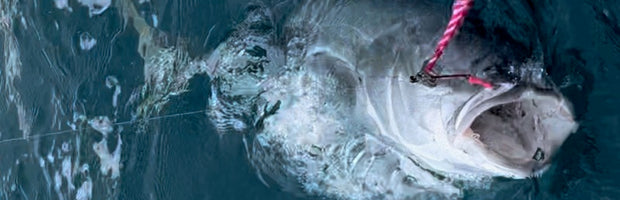


Albacore tuna are one of New Zealand's most exciting offshore targets — hard-fighting, great eating, and available in numbers during the summer and autumn months. Trolling is the go-to method for locating and catching albacore, and once you've dialled it in, you'll find it one of the most productive offshore techniques around.
When and Where to Find Albacore in NZ
Albacore typically arrive in NZ waters between January and May, following the warm East Auckland Current and its associated baitfish. They're an open-ocean species, so you'll generally need to travel offshore to find them:
- North Island east coast: Bay of Plenty (offshore from Whakatāne and Ōpōtiki), East Cape, and Hawke's Bay are consistently productive
- Northland: The waters off the Three Kings Islands and North Cape see good albacore runs
- South Island north: The Marlborough Sounds and Cook Strait can fire up when albacore push south
Look for the temperature break — albacore congregate along the edge where warm blue water meets cooler green water. Sea surface temperature (SST) charts are invaluable here; albacore typically favour 18–22°C water.
Trolling Speed and Spread
Albacore are fast, aggressive predators and respond well to a fast troll — typically 7–10 knots, which is faster than you'd fish for most other NZ species. This speed suits skirted lures and creates an active, splashing action that mimics fleeing baitfish.
Spread setup:
- Run 4–6 lines staggered at different distances — short riggers (10–15m), long riggers (25–35m), and flat lines (8–12m)
- Vary the distance between lines to cover different parts of the prop wash and clean water
- Include at least one lure on the surface to create a splashing teaser effect
Best Lures for Albacore Trolling
Albacore aren't fussy, but certain lure styles and colours consistently outperform:
- Skirted lures (5–8"): Pink/white, blue/white, and green/yellow are NZ favourites. The action at 8 knots is irresistible to albacore.
- Feather jigs: A classic albacore lure — lightweight, cheap, and deadly. White and pink are top colours.
- Bibbed minnows (hard body lures): Good on the flat lines at slightly slower speeds. Choose a lure rated to run at 7–9 knots.
- Soft plastic trolling lures: Work well when albacore are feeding on smaller baitfish.
Run a mix of lure types across your spread — when you find what's working, concentrate more lines on that style.
Gear Setup for Albacore Trolling
- Rod: Medium–heavy trolling rod, 15–24kg rating, 1.8–2.1m
- Reel: Overhead trolling reel with good line capacity — albacore make long runs. 4000–6000 size lever-drag reels work well.
- Line: 24–37kg (50–80lb) monofilament or PE4–6 braid with a long mono topshot (50–100m) to act as a shock absorber
- Leader: 60–80lb fluorocarbon, 2–4m — albacore have reasonable eyesight, so don't go heavier than necessary
- Hooks: Check and sharpen hook points before every trip — albacore have tough mouths and a sharp hook makes the difference on strike-to-hookup ratio
Reading the Water and Finding Fish
Beyond SST charts, look for these signs when searching for albacore:
- Bird activity: Gannets and shearwaters diving are a dead giveaway — troll through the area immediately
- Colour change: The visible line where blue meets green water — troll along this edge rather than in one colour
- Surface bait: Jumping or skipping baitfish means predators are below
- Porpoises: Often found with tuna — if you see dolphins working, slow down and look around
Fighting and Landing Albacore
Albacore are exceptional fighters for their size — a 10kg fish will feel like twice that on a trolling rod. Key tips:
- Keep the drag firm but not locked — albacore make sudden direction changes and a heavy drag will result in pulled hooks
- Don't rush the fish to the boat; let it tire itself out on the drag
- Gaff or lip-grip carefully — albacore are powerful right up to the boat
- Bleed and ice immediately for best eating quality — albacore are a premium table fish when handled well
Albacore on the Table
Fresh albacore is one of the finest tuna for eating — lighter in colour and milder in flavour than yellowfin or bluefin, with a rich oil content that makes it perfect for sashimi, tataki, or a good sear. Bleed the fish immediately at capture, then ice it down — the difference between a well-bled fish and one left to die in the sun is enormous.
Check out our full range of offshore trolling lures and jigging gear — everything you need to target albacore and other pelagic species in NZ waters.